



.png)

If you’re only offering tours in a single language, you could be missing out on thousands of ready-to-book travelers.
When we analyzed 3.1 million verified reviews, one pattern stood out: language consistently shows up as a concern for certain traveler groups. French and German travelers cite language barriers as a top issue. Japanese, Korean, Spanish, and Italian travelers mention it regularly too. These markets represent millions of active travelers who book experiences frequently and spend well.
Our latest data also shows that travelers who find experiences offered in their preferred language are significantly more likely to book.
By adding their languages as language options, you can reach travelers who are actively searching but often finding very few options.
In this article, we'll cover why offering tours in multiple languages leads to more bookings, how to use your data to choose the right languages for your market, and a step-by-step method to add them without complicating your operations.
Why expanding your language offer matters for bookings
1. Tap into underserved markets: While English is common, most travelers prefer experiences in their native language. Offering tours in languages like Spanish, French, German, or Japanese puts you in a less saturated space where demand often exceeds supply.
Take Unlimited Biking, for example. After identifying German and Dutch cyclists as high-value markets through GetYourGuide Analytics, they expanded their Central Park tour to five languages.
"We now offer our Central Park tour in five languages, including German which we added recently. The Dutch market is huge for us too, and they're such avid cyclists that we even created longer tours", says Annie Zou, Director of Sales at Unlimited Biking.
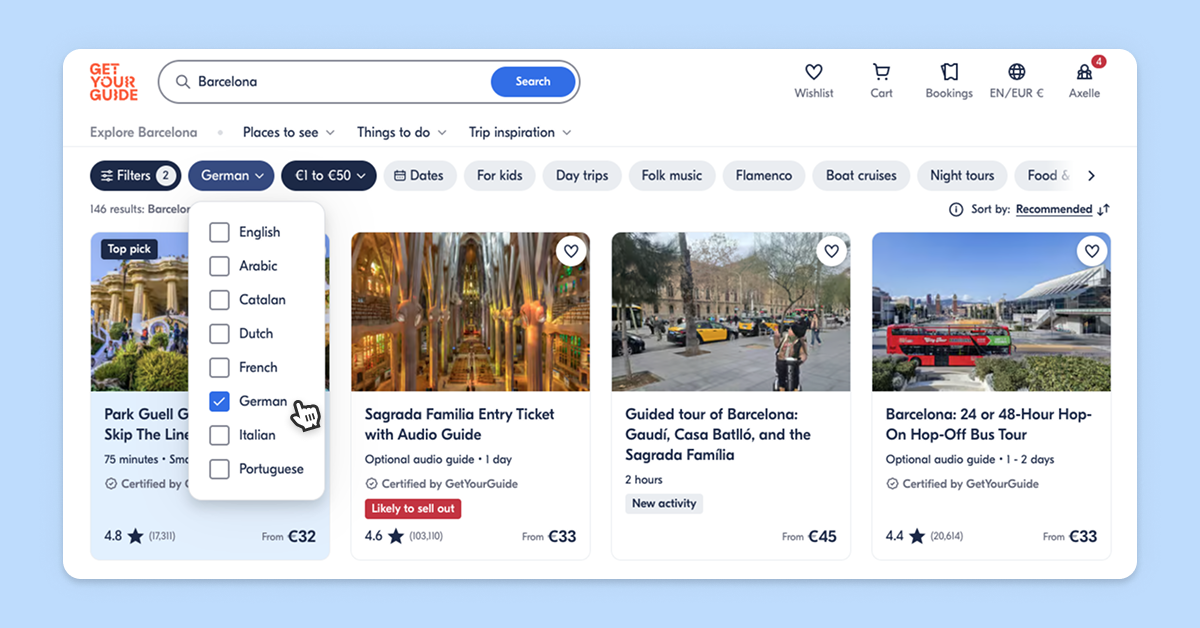
2. Show up when travelers search: When travelers filter by language, tours that don't offer that specific language simply don't appear. Each language you add multiplies your chances of being discovered.
For instance, a German family searching for tours in Barcelona will filter for German-language options. If you don’t offer German, they won’t see you, even if you have the perfect tour for them.
3. Earn better reviews and higher ratings: Travelers who can fully engage in their preferred language have better experiences. That means higher ratings, more positive reviews, and a stronger reputation. Reviews in multiple languages also serve as social proof for different market segments, showing that your tour genuinely welcomes their language group.
4. Increase your appeal and booking likelihood: Tours in less common languages are seen as more specialized and harder to find. When travelers discover a tour in their preferred language, they're significantly more likely to book. While some experience creators may justify higher prices due to additional costs, the real advantage is differentiation - you become the go-to choice for travelers searching in that language, which naturally increases demand.
"Offering tours in multiple languages helps us connect with both locals and international visitors in ways that feel personal and authentic", says Augustin Pasquet, CEO of Untapped New York
In a world where AI can translate text instantly, the human connection of a guide speaking your language fluently becomes even more valuable. It's something technology can't replicate, and travelers notice the difference.
How to add languages to your GetYourGuide listing
This is the most important step: make sure your languages are set up correctly in your product options so travelers can actually find you.
Here's how:
- Log into your Supplier Portal
- Go to your product and click "Edit Option"
- In Option Setup, find "What languages is the activity offered in?"
- Select each language from the drop-down (it will appear in a grey box)
- Add all languages your guides can offer
- Click Save
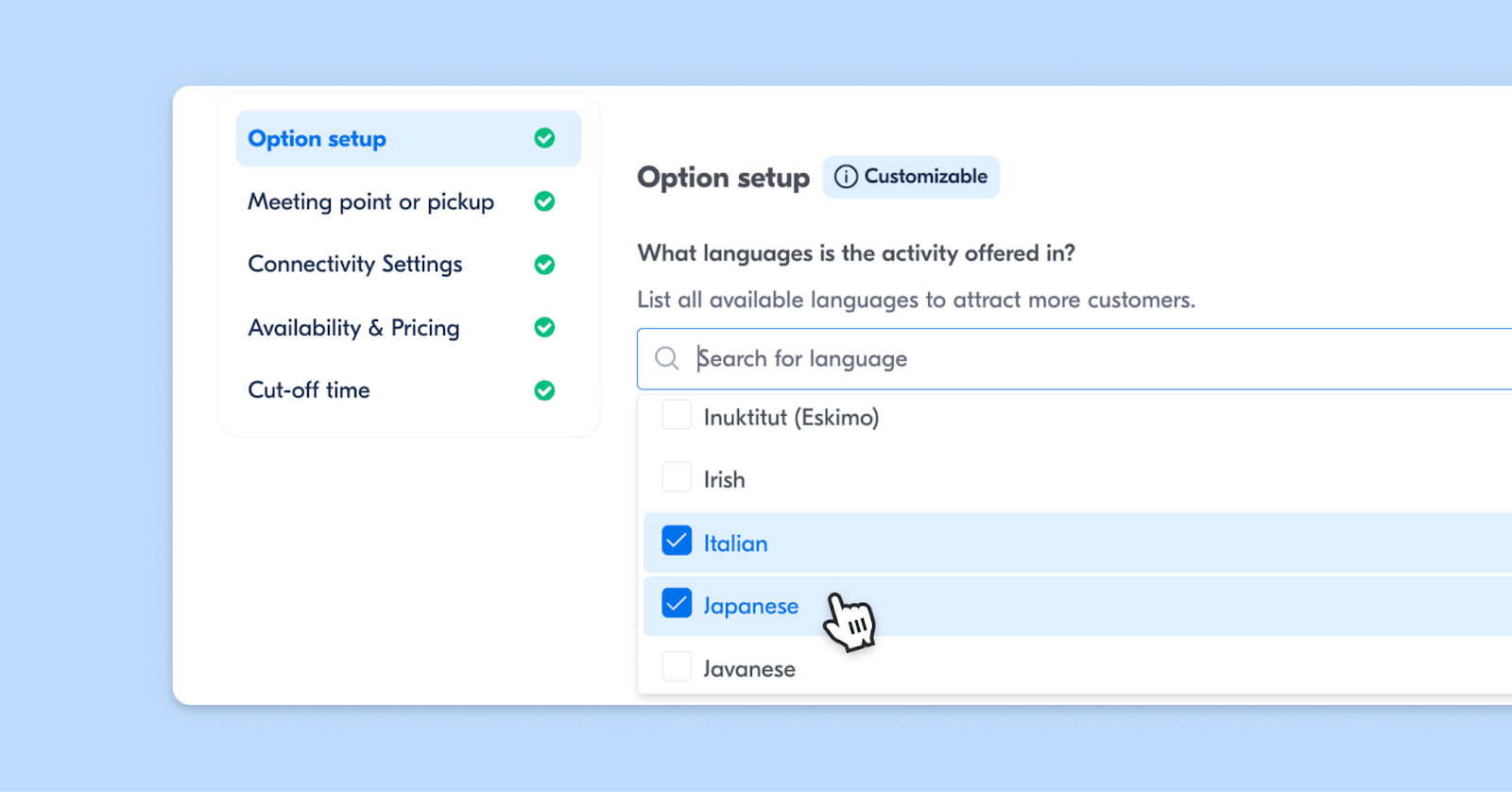
Pro tip: If your guides don't share the same availability, you can create separate options within the same product (one per language). This way, each option has its own calendar and availability settings, making it easier to manage different schedules.
Important: Don't just mention languages in your title. Use the structured language field in your product setup.
This ensures:
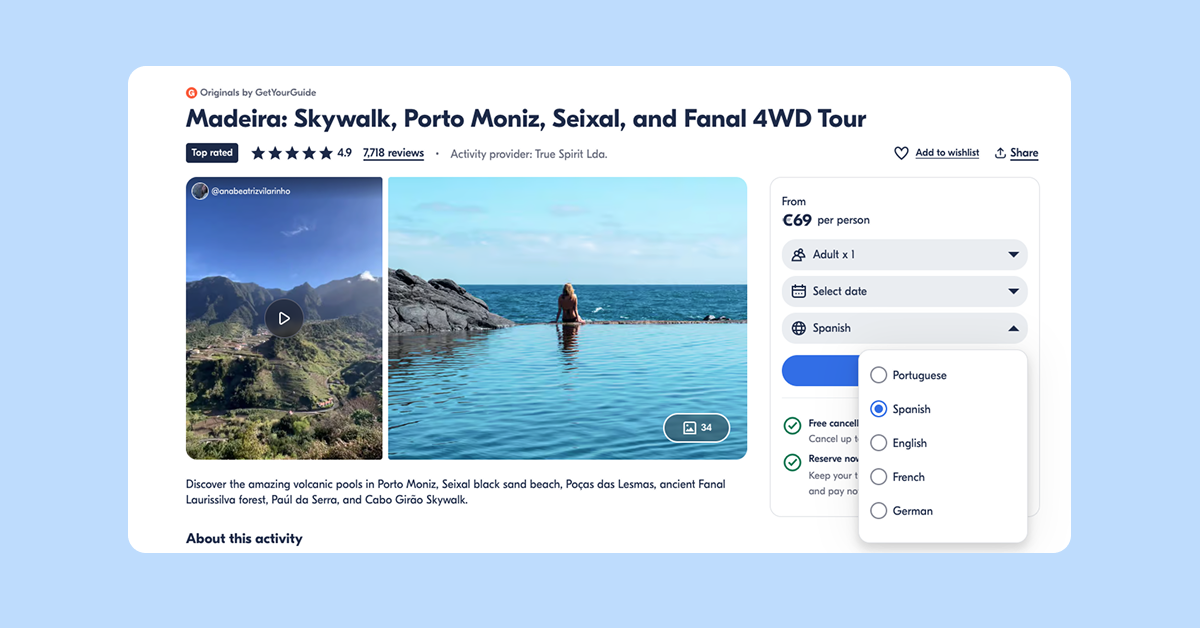
- Travelers can filter and find you in search results
- Languages display clearly in your activity details
- GetYourGuide's system can better match your tour to the right audience
- Your listing appears when travelers search in their preferred language
How to think strategically about adding languages
Adding languages isn’t about hiring guides for every language overnight. A smart, data-driven approach maximizes your return and helps support sustainable growth.
Start with your data, not your assumptions
As we always recommend, use data to inform your decision.
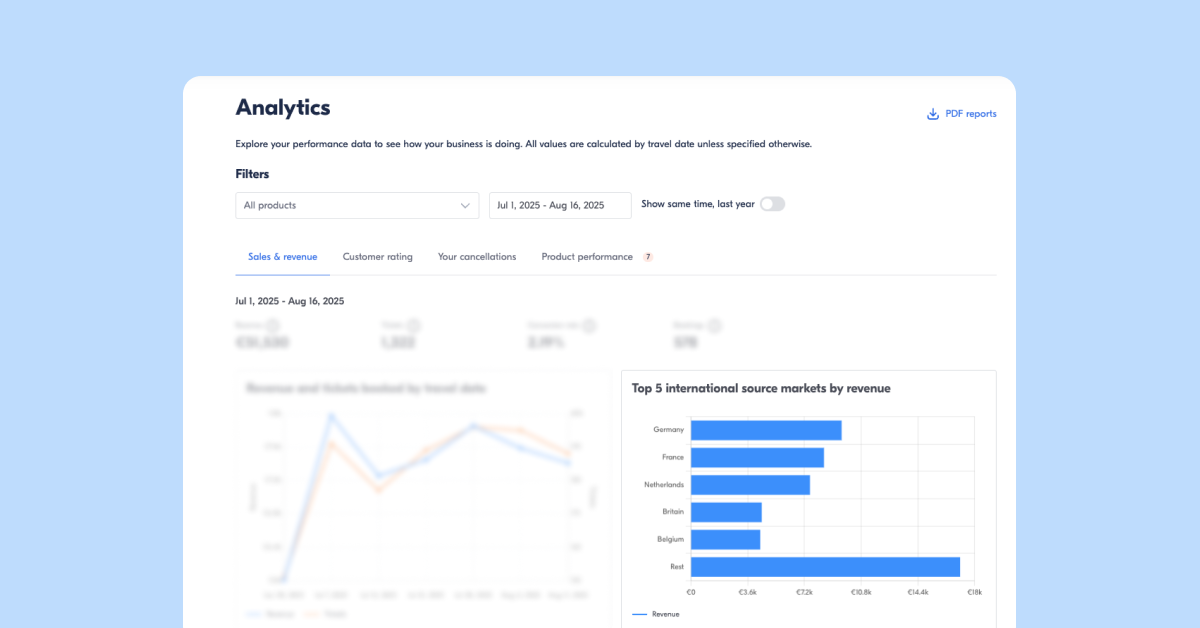
Your GetYourGuide Analytics dashboard shows you exactly which countries send you the most traffic. Use this data to make smart decisions about which languages to add.
How to do it:
- Check Analytics in the Supplier Portal to see your top source markets by revenue
- Look at which countries send you the most traffic or bookings
- Ask yourself: Which of these travelers would benefit from a tour in their preferred language?
If you see growing interest from Japan, Korea, Spain, France, Italy, or Germany, adding those languages can help you capture more of that demand.
Learn more: Using GetYourGuide Analytics to Grow Your Business
Once you've identified your top source markets, the next step is understanding where you can stand out from the competition.
Find your competitive edge
A smart way to find your niche is to identify what your competitors aren't offering. Search for tours similar to yours on GetYourGuide. Which languages do your top competitors offer? Look for the gaps: which languages have high demand but low supply?
For example, if you're in Rome and most operators offer English, Spanish, and French, but very few offer Japanese or Korean, that’s your opportunity. Asian travelers visiting Rome would love a tour in their language, and you'd face less competition.
In the age of AI, the personal touch of a guide who truly speaks a traveler's language, with cultural understanding and authentic connection, is something that really stands out and represents a significant competitive advantage that will set you apart from others. It's also a signal that you're committed to delivering quality and personalized experiences.
Recommended read: What Makes Activities Stand Out
Found a gap in the market? Great. But before you rush to add five new languages, here's the smartest way to begin.
Start with one language you can deliver consistently
One well-delivered language option is better than many you can't staff reliably. Pick one language tied to a strong source market and keep it simple.
Here's how to start:
- Choose one language that matches a strong source market in your Analytics
- Start with your best-selling tour
- Offer it on limited departures first (e.g., weekends only)
- Track bookings for a few weeks, then decide whether to expand
Starting small lets you test demand without overcommitting resources. You can scale up once you see results and understand what works.
Tap into your team's hidden strengths
You may already have the resources you need to add a new language.
Ask your current guides which languages they speak confidently at a professional level. You may already have the resources you need. If one of your guides is a native Italian speaker but you've only been using them for English tours, test offering Italian-language tours with them a few times per week.
Pro tip: If hiring full-time guides for multiple languages isn't immediately feasible, consider partnerships with local language schools, cultural organizations, or freelance guides who specialize in specific languages.
Match availability to operational reality
Of course, consistency matters more than variety. If your French-speaking guide only works weekends, make the French option available on those days only.
For this scenario, we recommend using separate options to manage different availability for each language.
Reliability drives repeat bookings and positive reviews. Travelers remember when you deliver exactly what you promised.
Key questions to guide your thinking
Before you add a new language, reflect on these guiding questions to focus your efforts:
✅ Which countries are sending me the most traffic but the lowest conversion rates?
✅ Which one language would unlock the biggest new audience for my destination?
✅ What languages do my current guides speak that I'm not currently offering?
✅ Which languages do my competitors NOT offer that could give me an edge?
✅ Can I commit to offering this language consistently for at least 3 months to test demand?
✅ How will I scale up if demand for this language grows?
Get ready for the upcoming season
With Easter and spring just weeks away, now is the perfect time to act. The travelers who will fill your tours this spring are searching on GetYourGuide right now. Make sure they can find you in their language.
Start by looking at your current audience data in your Supplier Portal. Identify your highest-potential language markets and take that first step toward offering tours in multiple languages.




.png)